Gas Suppression Systems
In today’s rapidly evolving technological and commercial landscape, reliable fire safety solutions are essential. King Fire’s gas suppression systems are specifically designed to protect critical environments such as server rooms, data centers, and other high-value assets, effectively extinguishing fires without damaging sensitive equipment or compromising the surrounding environment.
With Singapore’s dense urban infrastructure and the increasing priority on asset protection and business continuity, having a trusted fire suppression strategy is crucial. Our systems provide fast, efficient, and non-disruptive fire suppression, ensuring seamless operations and safeguarding mission-critical facilities.
As Singapore continues to establish itself as a global technology hub, implementing advanced fire protection solutions like gas suppression is key to securing innovation, infrastructure, and long-term business sustainability.
Applications
- Total Flooding System (Room Protection)
- Cabinet System - Direct or indirect system
- Server Protection System
- Aerosol System
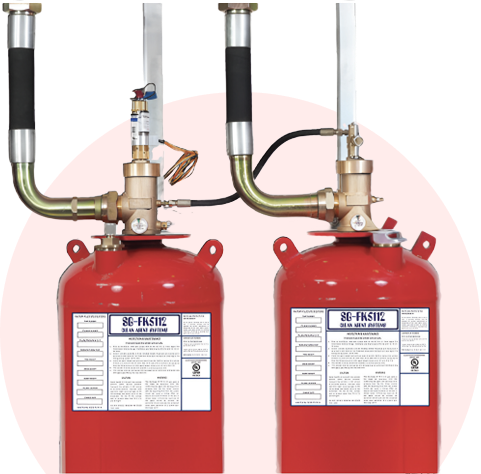
Types of Gas Suppression Agents
| Clean Agent | Inert Gas | ||||
|---|---|---|---|---|---|
| HFC227 (FM200) | FK5112 (Novec 1230) | IG541 | IG55 | CO₂ | |
| Description | Active instantly to flood the area with a gas that cools the heat from fire, quickly putting it out. The gas then dissipates, leaving no residue behind. | Releases a blend of naturally occurring gases that reduce the area’s oxygen level, suffocating the fire without chemical reactions. The environment returns to normal once the system is ventilated. | |||
| Key Benefits |
|
|
|||
| Ideal For | Server rooms, data centres, & telecommunications facilities | Large server rooms, data centres, archives, museums & spaces where historical or valuable items are stored | |||
| Properties | Hydrofluorocarbons (HFCs), Perfluorinated ketones (PFKs) |
52% N₂ 49% Ar 8% CO₂ |
50% N₂ 50% Ar |
CO₂ | |
How Does a Gas Suppression System Work?
Gas suppression systems are designed to extinguish fires by releasing a clean, gaseous agent that suppresses flames without using water. These systems are commonly installed in environments where water-based suppression could damage sensitive equipment, such as data centres, server rooms, control rooms, and electrical facilities.
The system works by detecting a fire at its early stages through smoke, heat, or flame detectors. Once a fire is confirmed, the control panel activates the suppression sequence. Audible and visual alarms are typically triggered to alert occupants and allow safe evacuation before agent discharge. The gas suppression agent is then released through a network of pipes and nozzles into the protected area.
Depending on the type of agent used, the gas suppresses fire by reducing oxygen levels, interrupting the chemical reaction of combustion, or absorbing heat. The agent disperses evenly throughout the enclosure, ensuring rapid and effective fire control while leaving no residue.
This allows critical equipment to remain intact and operations to resume quickly after an incident.
Benefits of Gas Suppression Systems
- Protects Sensitive Equipment: Gas suppression systems extinguish fires without water, preventing damage to electronic equipment, servers, and critical infrastructure.
- Fast and Effective Fire Suppression: The gaseous agent is discharged rapidly, controlling fires at an early stage before they spread.
- No Residue After Discharge: Clean agent systems leave no residue, reducing cleanup time and enabling faster recovery of operations.
- Minimal Business Disruption: By limiting fire damage and avoiding water-related issues, gas suppression systems help maintain business continuity.
- Safe for Occupied Spaces: When designed and installed correctly, gas suppression systems are safe for occupied areas and allow time for evacuation.
- Supports Compliance Requirements: These systems help facilities meet fire safety expectations for high-risk and mission-critical environments.
Why Choose KING FIRE for Gas Suppression Systems?
KING FIRE has extensive experience in delivering reliable gas suppression solutions for a wide range of critical environments in Singapore. With in-depth knowledge of fire protection engineering, KING FIRE designs and implements systems that are tailored to the specific risks and operational needs of each facility.
The company uses quality-approved products and advanced suppression technologies to ensure dependable performance and system integrity. KING FIRE provides comprehensive customer support, from system design and installation to inspection and maintenance, ensuring long-term reliability.
By offering cost-effective solutions backed by strong industry experience and reputation, KING FIRE helps clients achieve effective fire protection while meeting compliance and regulatory requirements, giving businesses confidence and peace of mind.
Frequently Asked Questions
How often do gas suppression systems need to be serviced?
Gas suppression systems should be serviced regularly as part of a preventive maintenance program to ensure reliability and readiness during emergencies.
Are there any environmental considerations associated with gas suppression agents?
Modern gas suppression agents are designed to minimise environmental impact and are selected based on safety, effectiveness, and compliance considerations.
What are the advantages of gas suppression systems over water-based sprinkler systems?
Gas suppression systems do not use water, making them ideal for protecting sensitive equipment and areas where water damage could cause significant disruption.
How often should gas suppression systems be inspected and maintained for optimal performance?
Inspection and maintenance schedules depend on system type and usage, but routine checks are essential to ensure proper operation.
Can gas suppression systems be integrated with other fire protection systems?
Yes, gas suppression systems can be integrated with fire alarms, smoke detectors, and building management systems for coordinated fire response.
What will be the cost to install a gas suppression system?
The cost varies based on system type, protected area size, and installation complexity. A site assessment is typically required for accurate costing.
View Products by Brands